- Published on
Org Chart Is a Pyramid, Not a Diamond
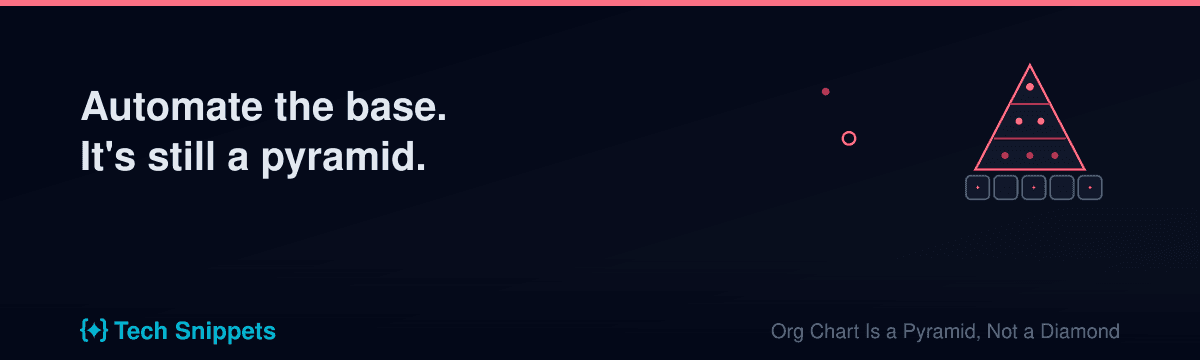
There's a popular story right now: AI automates the grunt work at the bottom, so the org's pyramid — a wide base of juniors, a narrow tip of executives — swells into a diamond, fat with senior people directing agents. The version making the rounds even promises the diamond ends up bigger than the pyramid. It's an appealing picture. It's also wrong about the shape.
Org charts aren't pyramids by accident or by nostalgia. They're pyramids because of a constraint AI doesn't repeal: span of control. One person can direct only so many others before coordination breaks down — call it seven, call it ten. That single ratio, applied recursively, is what makes an org a pyramid. It has nothing to do with whether the bottom rung is staffed by juniors or by machines.
So watch what happens when AI eats the base. The rote execution moves to agents — granted. But someone has to direct those agents, and someone has to direct the directors, and the same fan-out ratio reasserts itself one level up. You haven't flattened the pyramid. You've rebuilt it on top of the machines. The base is silicon now; the human hierarchy above it is the shape it always was.
The diamond has a second problem: it eats its own future. A fat middle with no junior base is an org with no pipeline — nobody learning the craft from the bottom, nobody becoming the next senior. Diamonds don't stay diamonds. They revert to pyramids the moment you ask where the next generation of experienced people comes from.
None of this means AI changes nothing. It changes who sits at the bottom, how much the org can produce, maybe even how many people it employs. But shape is downstream of coordination, and coordination is stubbornly human. Automate every task you like. You'll still be standing in a pyramid — just a taller one, with robots holding up the floor.